จากรั้วมหาวิทยาลัยสู่โลกการทำงาน: การพัฒนาทักษะสีเขียวเพื่อขับเคลื่อนประเทศไทยสู่เป้าหมายการปล่อยก๊าซเรือนกระจกสุทธิเป็นศูนย์
Policy Lab: ศูนย์วิจัยและฝึกอบรมด้านอุตสาหกรรมเชิงนิเวศ
คณะสิ่งแวดล้อมและทรัพยากรศาสตร์ มหาวิทยาลัยมหิดล
(English Version Below)
ที่มาและความสำคัญ
การเปลี่ยนผ่านของประเทศไทยสู่เศรษฐกิจที่มุ่งสู่เป้าหมายการปล่อยก๊าซเรือนกระจกสุทธิเป็นศูนย์ (Net Zero Economy) กำลังสร้างทั้งโอกาสและความต้องการใหม่ในตลาดแรงงาน เพื่อขับเคลื่อนประเทศสู่เป้าหมายการปล่อยก๊าซเรือนกระจกสุทธิเป็นศูนย์ภายในปี พ.ศ. 2593 ประเทศไทยไม่เพียงจำเป็นต้องพัฒนาพลังงานหมุนเวียน เทคโนโลยีคาร์บอนต่ำ และนโยบายด้านสภาพภูมิอากาศเท่านั้น แต่ยังต้องอาศัยบุคลากรที่มีความรู้และทักษะในการนำแนวทางเหล่านี้ไปประยุกต์ใช้และดำเนินการได้จริงด้วย
เหตุใดทักษะสีเขียวจึงมีความสำคัญ?
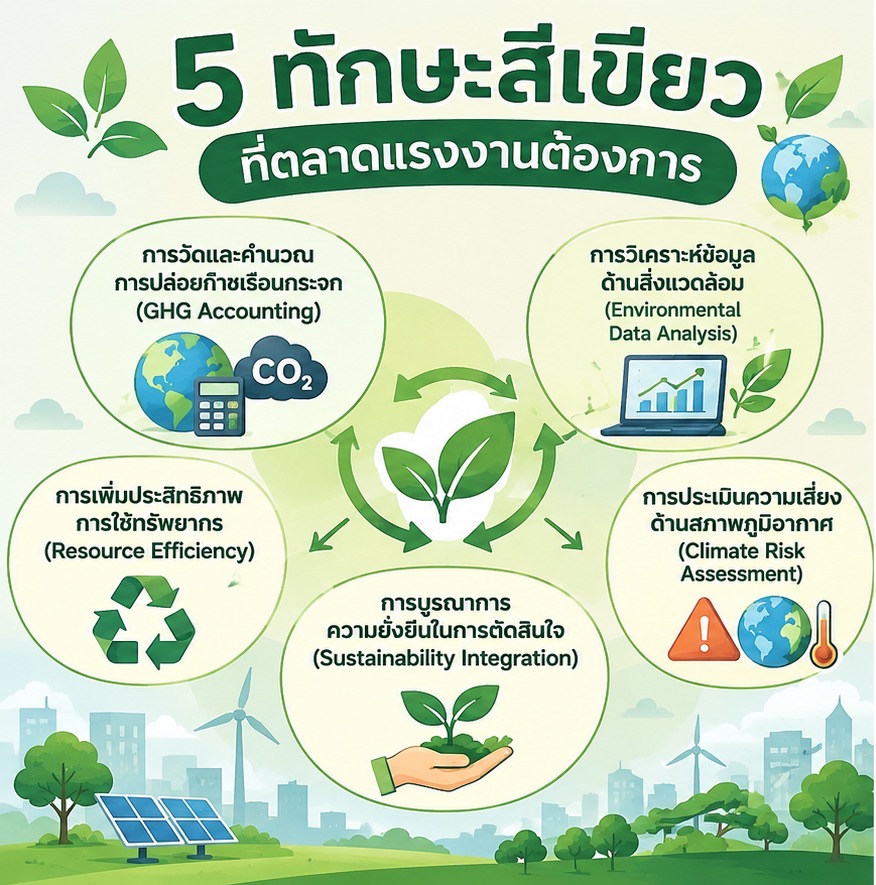
ปัจจุบัน องค์กรต่าง ๆ มีความต้องการบุคลากรที่มีความสามารถในการวัดปริมาณการปล่อยก๊าซเรือนกระจก วิเคราะห์ข้อมูลด้านสิ่งแวดล้อม เพิ่มประสิทธิภาพการใช้ทรัพยากร ประเมินความเสี่ยงด้านสภาพภูมิอากาศ และบูรณาการแนวคิดด้านความยั่งยืนเข้ากับกระบวนการตัดสินใจมากขึ้น ทักษะเหล่านี้ไม่ได้จำกัดอยู่เฉพาะบุคลากรในสายอาชีพด้านสิ่งแวดล้อมเท่านั้น แต่ยังมีความสำคัญต่อวิศวกร บุคลากรด้านธุรกิจ การเงินและการจัดซื้อ นักวิเคราะห์ข้อมูล ตลอดจนบุคลากรภาครัฐอีกด้วย
นอกจากนี้ พัฒนาการด้านนโยบายและกฎระเบียบของประเทศไทยยังเป็นปัจจัยสำคัญที่ส่งเสริมความต้องการบุคลากรด้านสิ่งแวดล้อมและความยั่งยืน ไม่ว่าจะเป็นข้อกำหนดด้านการเปิดเผยข้อมูลความยั่งยืนและการรายงาน ESG ตลอดจนร่างพระราชบัญญัติการเปลี่ยนแปลงสภาพภูมิอากาศ ซึ่งเสนอให้มีกลไกการรายงานการปล่อยก๊าซเรือนกระจก (GHG Emissions Reporting) และระบบซื้อขายสิทธิในการปล่อยก๊าซเรือนกระจก (Emissions Trading System: ETS) กลไกเหล่านี้สะท้อนถึงความจำเป็นในการพัฒนาบุคลากรที่มีความเชี่ยวชาญด้านการจัดการข้อมูล การตรวจวัด การรายงาน การทวนสอบ และการให้คำปรึกษาด้านการปล่อยก๊าซเรือนกระจก ทั้งนี้ สำนักงานสภานโยบายการอุดมศึกษา วิทยาศาสตร์ วิจัยและนวัตกรรมแห่งชาติ (สอวช. หรือ NXPO) ประเมินว่า ภายในปี พ.ศ. 2573 ประเทศไทยจะมีความต้องการบุคลากรด้านการเปลี่ยนแปลงสภาพภูมิอากาศประมาณ 235,000–275,000 คน [1]
เพื่อตอบสนองต่อความต้องการดังกล่าว ประเทศไทยได้เริ่มขับเคลื่อนงานวิจัยและโครงการเพื่อเตรียมความพร้อมด้านกำลังคน เช่น การดำเนินโครงการ Net Zero Campus ระยะที่ 3 โดย สอวช. ร่วมกับเครือข่ายมหาวิทยาลัย นอกจากนี้ สภานโยบายฯ ยังได้เห็นชอบข้อเสนอเชิงนโยบายของ สอวช. เรื่องการขับเคลื่อนภารกิจด้านการเปลี่ยนแปลงสภาพภูมิอากาศผ่านการอุดมศึกษา วิทยาศาสตร์ วิจัยและนวัตกรรม (พ.ศ. 2570–2575) โดยมุ่งเน้น 3 ประเด็นสำคัญ ได้แก่
- กรอบการวิจัยและแผนงานด้านการเปลี่ยนแปลงสภาพภูมิอากาศ (พ.ศ. 2570–2575)
- โครงการพัฒนากำลังคนทักษะสูงเพื่อรองรับการเปลี่ยนผ่านสู่เศรษฐกิจคาร์บอนต่ำ
- โครงการ Net Zero Campus เพื่อมุ่งลดการปล่อยก๊าซเรือนกระจก ส่งเสริมนวัตกรรมด้านสภาพภูมิอากาศ และพัฒนามหาวิทยาลัยให้เป็นพื้นที่ต้นแบบในการพัฒนากำลังคน [2]
จากมหาวิทยาลัยสู่เส้นทางอาชีพ: เปลี่ยนองค์ความรู้ด้านสิ่งแวดล้อมให้เป็นทักษะที่ใช้ได้จริง
การพัฒนาทักษะสีเขียวไม่ได้จำกัดอยู่เพียงการเรียนรู้ในห้องเรียนเท่านั้น แต่นักศึกษาจำเป็นต้องได้รับโอกาสในการนำองค์ความรู้ไปประยุกต์ใช้กับความท้าทายในสถานการณ์จริง โดยมหาวิทยาลัยสามารถทำหน้าที่เป็นห้องปฏิบัติการมีชีวิต (Living Lab) ที่เปิดโอกาสให้นักศึกษาเรียนรู้ผ่านการลงมือปฏิบัติ เช่น การประเมินคาร์บอนฟุตพริ้นท์ การคิดเชิงวัฏจักรชีวิต (Life Cycle Thinking) การเพิ่มประสิทธิภาพการใช้ทรัพยากร และการดำเนินกิจกรรมด้านการเปลี่ยนแปลงสภาพภูมิอากาศ ทั้งนี้ โครงการมหาวิทยาลัยสู่การเป็นกลางทางคาร์บอน (Carbon Neutrality Campus: CNC) ของมหาวิทยาลัยมหิดล เป็นตัวอย่างของการนำแนวคิดด้านความยั่งยืนมาพัฒนาสภาพแวดล้อมภายในมหาวิทยาลัยให้เป็นพื้นที่แห่งการเรียนรู้และฝึกฝนทักษะเชิงปฏิบัติ
นอกจากนี้ การเรียนรู้ดังกล่าวยังสามารถต่อยอดไปสู่สถานประกอบการผ่านโครงการสหกิจศึกษาและการศึกษาเชิงบูรณาการกับการทำงาน (Cooperative and Work-Integrated Education: CWIE) ซึ่งเป็นรูปแบบการเรียนรู้ที่เกิดจากความร่วมมือระหว่างสถาบันอุดมศึกษาและภาคธุรกิจ โดยผสมผสานการเรียนรู้ทางวิชาการเข้ากับประสบการณ์การทำงานจริง เพื่อพัฒนาความรู้ ทักษะ ทัศนคติ และค่านิยมของนักศึกษาให้สอดคล้องกับความต้องการของตลาดแรงงาน ตลอดจนเตรียมความพร้อมสำหรับการประกอบอาชีพทั้งในปัจจุบันและอนาคต ผ่านการปฏิบัติงาน การฝึกประสบการณ์วิชาชีพ และการฝึกงาน [3]
ตัวอย่างความร่วมมือที่เป็นรูปธรรม คือ การลงนามบันทึกข้อตกลงความร่วมมือระหว่างคณะสิ่งแวดล้อมและทรัพยากรศาสตร์ มหาวิทยาลัยมหิดล กับกลุ่มบริษัทเด็นโซ่ ประเทศไทย (Thai DENSO Group) เมื่อวันที่ 10 กันยายน พ.ศ. 2569 เพื่อส่งเสริมการจัดการศึกษารูปแบบ CWIE โดยเปิดโอกาสให้นักศึกษาได้รับประสบการณ์จากการทำงานจริง และพัฒนาทักษะให้สอดคล้องกับความต้องการของภาคอุตสาหกรรม [4]
การดำเนินงานร่วมกันระหว่างโครงการ CNC และ CWIE จึงเป็นการสร้างเส้นทางเชื่อมโยงจากการเรียนรู้ไปสู่การประยุกต์ใช้จริง โดยนักศึกษาสามารถเริ่มต้นจากการพัฒนาสมรรถนะด้านความยั่งยืนผ่านประสบการณ์ภาคปฏิบัติภายในมหาวิทยาลัย ก่อนนำทักษะเหล่านั้นไปต่อยอดและประยุกต์ใช้กับความท้าทายในการดำเนินงานจริงขององค์กรและภาคอุตสาหกรรม
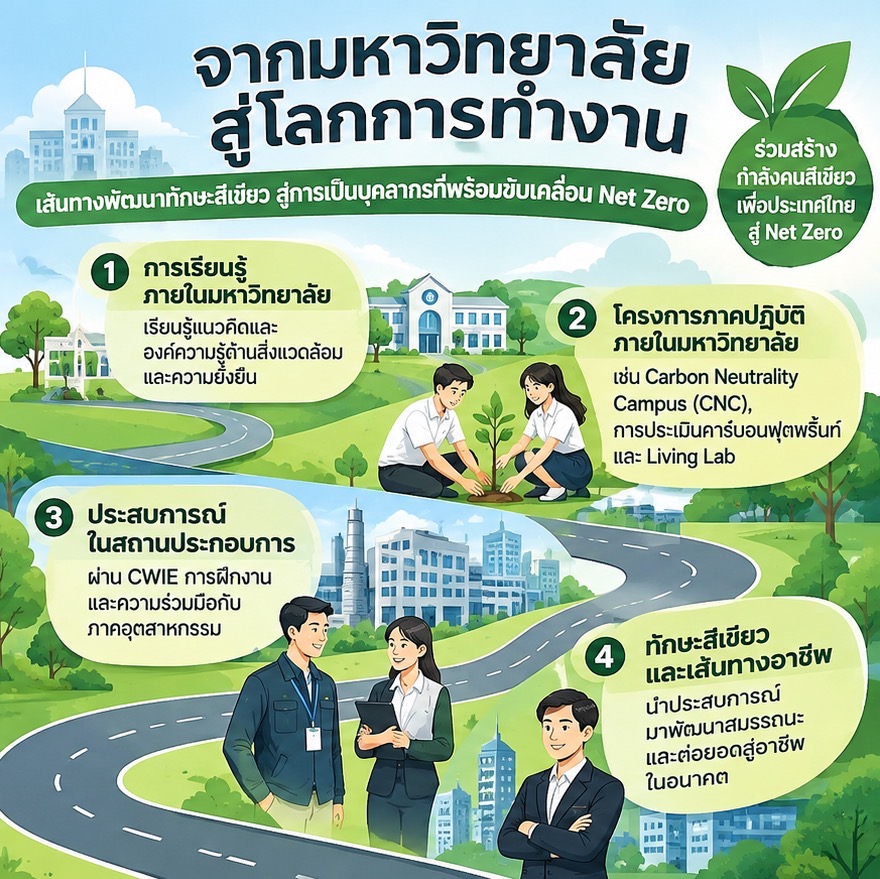
เส้นทางการพัฒนาทักษะสีเขียวจากมหาวิทยาลัยสู่สถานประกอบการ
| การเรียนรู้ภายในมหาวิทยาลัย | ➔ | โครงการภาคปฏิบัติภายในมหาวิทยาลัย | ➔ | ประสบการณ์ในสถานประกอบการ | ➔ | ทักษะสีเขียวและเส้นทางอาชีพ |
นอกจากนี้ การจัดทำเอกสารบันทึกประสบการณ์ผ่านรายงานโครงการ การประเมินผลจากการปฏิบัติงานจริง และแฟ้มสะสมผลงาน (Portfolio) ยังช่วยให้นักศึกษาสามารถแสดงสมรรถนะด้านความยั่งยืนของตนเองแก่ผู้ประกอบการและนายจ้างในอนาคตได้อย่างเป็นรูปธรรม
การสร้างโอกาสให้แก่คนรุ่นใหม่
คนรุ่นใหม่ในประเทศไทยมีส่วนร่วมในการขับเคลื่อนการดำเนินงานด้านสภาพภูมิอากาศและสิ่งแวดล้อมมาอย่างต่อเนื่อง โดยรายงานขององค์การยูนิเซฟ ประเทศไทย เรื่อง Between Generations, One Planet: A Landscape Analysis of Youth Climate and Environmental Action in Thailand ระบุว่า ประเทศไทยมีองค์กรที่ขับเคลื่อนโดยเยาวชนมากกว่า 110 องค์กรทั่วประเทศ อย่างไรก็ตาม รายงานยังสะท้อนให้เห็นถึงอุปสรรคต่อการมีส่วนร่วมของเยาวชน โดยเฉพาะข้อจำกัดในการเข้าถึงแหล่งทุน ทรัพยากร และโอกาสในการมีส่วนร่วมในกระบวนการตัดสินใจ [5]
ดังนั้น มหาวิทยาลัยและนายจ้างจึงมีบทบาทสำคัญในการลดอุปสรรคเหล่านี้ ผ่านการเปิดโอกาสให้คนรุ่นใหม่เข้ามามีส่วนร่วมในโครงการด้านความยั่งยืนภายในมหาวิทยาลัย การให้คำปรึกษาและคำแนะนำจากผู้มีประสบการณ์ (Mentorship) การฝึกอบรม การฝึกงาน และความร่วมมือกับภาคอุตสาหกรรม โอกาสเหล่านี้จะช่วยให้นักศึกษาสามารถนำองค์ความรู้ไปประยุกต์ใช้ในการทำงานจริง พัฒนาทักษะสีเขียวผ่านประสบการณ์ตรง และขยายเครือข่ายทางวิชาชีพ การเชื่อมโยงการดำเนินงานด้านสภาพภูมิอากาศเข้ากับประสบการณ์การทำงานจึงเป็นแนวทางสำคัญในการส่งเสริมให้คนรุ่นใหม่ก้าวขึ้นมาเป็นกำลังสำคัญในการขับเคลื่อนประเทศไทยสู่เป้าหมายการปล่อยก๊าซเรือนกระจกสุทธิเป็นศูนย์
การสร้างสะพานเชื่อมจากมหาวิทยาลัยสู่สถานประกอบการ
ท้ายที่สุด การเปลี่ยนผ่านของประเทศไทยสู่เป้าหมายการปล่อยก๊าซเรือนกระจกสุทธิเป็นศูนย์ขึ้นอยู่กับการมีกำลังคนที่สามารถเปลี่ยนองค์ความรู้ด้านสภาพภูมิอากาศให้กลายเป็นการลงมือปฏิบัติได้จริง โดยมหาวิทยาลัย นายจ้าง และผู้กำหนดนโยบาย ต่างมีบทบาทสำคัญในการเตรียมความพร้อมของกำลังคนเพื่อรองรับการเปลี่ยนผ่านดังกล่าว
แนวทางปฏิบัติ 3 ประการที่จะช่วยเชื่อมโยงช่องว่างระหว่างการเรียนรู้กับการจ้างงาน ได้แก่
- มหาวิทยาลัย: บูรณาการทักษะสีเขียวเข้ากับการจัดการเรียนรู้แบบสหวิทยาการ พร้อมเปิดโอกาสให้นักศึกษาได้ลงมือปฏิบัติจริงผ่านโครงการด้านความยั่งยืนภายในมหาวิทยาลัย การประเมินคาร์บอนฟุตพริ้นท์ และกิจกรรมภาคปฏิบัติอื่น ๆ
- นายจ้างและสถานประกอบการ: สนับสนุนโอกาสในการฝึกงาน การให้คำปรึกษาและคำแนะนำจากผู้มีประสบการณ์ ตลอดจนโครงการที่ดำเนินงานร่วมกับภาคอุตสาหกรรม เพื่อให้นักศึกษาสามารถนำองค์ความรู้ไปประยุกต์ใช้กับความท้าทายด้านความยั่งยืนในสถานการณ์จริง
- ผู้กำหนดนโยบายและเครือข่ายสถาบันอุดมศึกษา: สนับสนุนความร่วมมือระหว่างมหาวิทยาลัยกับภาคอุตสาหกรรม และขยายโอกาสในการพัฒนาทักษะสีเขียว โดยเฉพาะสำหรับคนรุ่นใหม่ที่กำลังก้าวเข้าสู่ตลาดแรงงาน
การเชื่อมโยงการเรียนรู้ในห้องเรียน ประสบการณ์ภาคปฏิบัติภายในมหาวิทยาลัย และโอกาสในการทำงานจริงเข้าด้วยกัน จะช่วยให้ประเทศไทยสามารถเตรียมความพร้อมกำลังคนรุ่นใหม่เพื่อรองรับการเปลี่ยนผ่านสู่เศรษฐกิจคาร์บอนต่ำได้อย่างมีประสิทธิภาพมากยิ่งขึ้น เส้นทางสู่เป้าหมายการปล่อยก๊าซเรือนกระจกสุทธิเป็นศูนย์จึงไม่ได้เริ่มต้นจากสิ่งที่เราสอนเพียงอย่างเดียว แต่ยังขึ้นอยู่กับประสิทธิภาพในการเชื่อมโยงการเรียนรู้ไปสู่การลงมือปฏิบัติจริงด้วย
เอกสารอ้างอิง
[1] Office of the National Higher Education, Science, Research and Innovation Policy Council (NXPO). (2025, December 29). MHESI-NXPO highlights universities as key drivers in Thailand’s Net Zero transition by 2050.
[2] Office of the National Higher Education, Science, Research and Innovation Policy Council (NXPO). (2026, September 26). NXPO and University Networks advance Net Zero Campus Phase 3.
[3] Ministry of Higher Education, Science, Research and Innovation (MHESI). Cooperative and Work-Integrated Education (CWIE).
[4] Faculty of Environment and Resource Studies, Mahidol University. (2026, September 10). ENVI Mahidol Signs MOU with Denso Group Thailand to Advance CWIE.
[5] UNICEF Thailand. (2025). Between generations, one planet: A landscape analysis of youth climate and environmental action in Thailand.
From Campus to Workplace: Building Green Skills for Thailand’s Net-Zero Transition
Policy Lab: Eco-Industry Research and Training Center,
Faculty of Environment and Resource Studies, Mahidol University
Background
Thailand’s transition toward a net-zero economy is creating both new opportunities and growing demands in the labor market. To achieve the country’s goal of net-zero greenhouse gas emissions by 2050, Thailand needs not only renewable energy, low-carbon technologies, and climate policies, but also a skilled workforce capable of translating these solutions into practical action.
Why Green Skills Matter
Organizations increasingly need professionals who can measure greenhouse gas emissions, analyze environmental data, improve resource efficiency, assess climate risks, and integrate sustainability into decision-making. These competencies are not limited to environmental professionals. Engineers, business professionals, finance and procurement officers, data analysts, and public-sector employees will also need green skills to respond to the changing demands of the economy.
Thailand’s evolving policy and regulatory landscape is further driving demand for environmental and sustainability professionals. Developments include sustainability disclosure and ESG reporting requirements, as well as the proposed Climate Change Act, which outlines mechanisms for greenhouse gas (GHG) emissions reporting and an Emissions Trading System (ETS). These developments highlight the growing need for professionals with expertise in emissions measurement, reporting, verification, and advisory services. The Office of the National Higher Education, Science, Research and Innovation Policy Council (NXPO) estimates that Thailand could require approximately 235,000–275,000 climate-related professionals by 2030 [1].
In response to this demand, Thailand has begun advancing research and initiatives to prepare its future workforce. One example is the Net Zero Campus Phase 3 initiative, launched through collaboration between NXPO and university networks. In addition, the National Higher Education, Science, Research and Innovation Policy Council approved NXPO’s policy proposal on Advancing Climate Change Missions through Higher Education, Science, Research and Innovation (2027–2032), focusing on three key priorities:
- The Climate Change Research Framework and Program (2027–2032);
- The High-Skilled Workforce Development Program to Support the Transition to a Low-Carbon Economy; and
- The Net Zero Campus Program, which aims to reduce GHG emissions, promote climate innovation, and develop universities as platforms for workforce development [2].
From Campus to Career: Turning Green Knowledge into Practical Skills
Green skills cannot be developed through classroom learning alone. Students need opportunities to apply their knowledge to real-world challenges. Universities can serve as living laboratories (Living Labs), where students gain practical experience through activities such as carbon footprint assessments, life-cycle thinking, resource efficiency initiatives, and climate action projects. Mahidol University’s Carbon Neutrality Campus (CNC) initiative provides an example of how campus sustainability can become a practical learning environment for developing sustainability competencies.
This learning can also extend into the workplace through Cooperative and Work-Integrated Education (CWIE) programs. CWIE is a collaborative learning model between higher education institutions and businesses that combines academic study with practical workplace experience. It aims to develop students’ knowledge, skills, attitudes, and values in line with labor market demands, while preparing them for current and future careers through workplace placements, professional practicums, and internships [3].
A practical example is the Memorandum of Understanding (MOU) signed between the Faculty of Environment and Resource Studies, Mahidol University, and Thai DENSO Group on September 10, 2026. The collaboration aims to promote CWIE and provide students with opportunities to gain real-world work experience and develop skills relevant to industry needs [4].
Together, CNC and CWIE create a pathway from learning to practical application. Students can first develop sustainability competencies through hands-on experiences on campus before applying these skills to real organizational and industrial challenges.
The Green Skills Development Pathway: From Campus to Workplace
| Campus Learning | ➔ | Practical Campus Project | ➔ | Workplace Experiences | ➔ | Green Skills and Careers |
Documenting these experiences through project reports, practical performance assessments, and portfolios can also help students demonstrate their sustainability competencies to prospective employers.
Creating Opportunities for Young People
Young people are already contributing to climate and environmental action across Thailand. UNICEF Thailand’s report, Between Generations, One Planet: A Landscape Analysis of Youth Climate and Environmental Action in Thailand, identified more than 110 youth-led organizations across the country. However, the report also highlighted barriers to youth participation, including limited access to funding, resources, and opportunities to participate in decision-making processes [5].
Universities and employers can play an important role in addressing these barriers by involving young people in campus sustainability projects, mentorship programs, training, internships, and industry collaborations. Such opportunities enable students to apply their knowledge in practical settings, develop green skills through hands-on experience, and expand their professional networks. Connecting climate action with workplace experience is therefore an important way to empower young people to become active contributors to Thailand’s net-zero transition.
Building the Campus-to-Workplace Bridge
Ultimately, Thailand’s transition toward net zero will depend on a workforce capable of translating climate knowledge into practical action. Universities, employers, and policymakers each have an important role to play in preparing the workforce for this transition.
Three practical actions can help bridge the gap between learning and employment:
- Universities: Integrate green skills into interdisciplinary learning and provide hands-on opportunities through campus sustainability projects, carbon footprint assessments, and other practical activities.
- Employers and businesses: Provide internships, mentorship programs, and industry-based projects that enable students to apply their knowledge to real-world sustainability challenges.
- Policymakers and higher education networks: Support university–industry partnerships and expand access to green skills development, particularly for young people entering the workforce.
By connecting classroom learning, campus-based practical experience, and workplace opportunities, Thailand can better prepare its future workforce for the transition to a low-carbon economy. The pathway to net zero begins not only with what we teach, but also with how effectively we connect learning to practical action.
References
[1] Office of the National Higher Education, Science, Research and Innovation Policy Council (NXPO). (2025, December 29). MHESI-NXPO highlights universities as key drivers in Thailand’s Net Zero transition by 2050. Available at: https://www.nxpo.or.th/th/en/42033/
[2] Office of the National Higher Education, Science, Research and Innovation Policy Council (NXPO). (2026, September 26). NXPO and University Networks advance Net Zero Campus Phase 3. Available at: https://www.nxpo.or.th/th/en/50879/
[3] Ministry of Higher Education, Science, Research and Innovation (MHESI). Cooperative and Work-Integrated Education (CWIE). Available at: https://cwie.mhesi.go.th/serviceDetail/a5p313a224
[4] Faculty of Environment and Resource Studies, Mahidol University. (2026, September 10). ENVI Mahidol Signs MOU with Denso Group Thailand to Advance CWIE. Available at: https://en.mahidol.ac.th/about/activities/2569/09/3386-envi-mahidol-mou-cwie
[5] UNICEF Thailand. (2025). Between generations, one planet: A landscape analysis of youth climate and environmental action in Thailand. Available at: https://www.unicef.org/thailand/reports/between-generations-one-planet