
ทำความเข้าใจ ISSB และมาตรฐานการเปิดเผยข้อมูลด้านความยั่งยืนของ IFRS:
จากมาตรฐานสากล สู่ประเทศไทย
Policy Lab: ศูนย์วิจัยและฝึกอบรมด้านนิเวศอุตสาหกรรม
คณะสิ่งแวดล้อมและทรัพยากรศาสตร์ มหาวิทยาลัยมหิดล
(English Version Below)
ความเป็นมา
ในปัจจุบัน ข้อมูลด้านความยั่งยืนเข้ามามีบทบาทมากขึ้นในการรายงานทางการเงิน เนื่องจากประเด็นด้านสิ่งแวดล้อม สังคม และการเปลี่ยนแปลงสภาพภูมิอากาศ ล้วนมีความเกี่ยวข้องกับการดำเนินงานขององค์กร รวมถึงความสามารถในการสร้างมูลค่าในระยะยาว
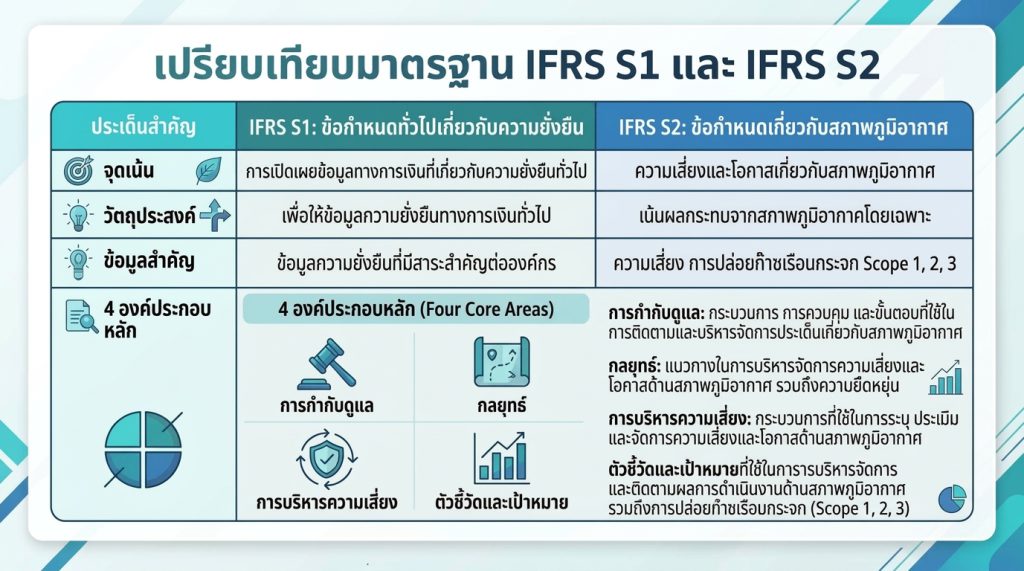
เพื่อให้การเปิดเผยข้อมูลทางการเงินที่เกี่ยวข้องกับความยั่งยืนมีแนวทางที่เป็นมาตรฐานในระดับสากล จึงได้มีการจัดตั้งคณะกรรมการมาตรฐานการเปิดเผยข้อมูลความยั่งยืนระหว่างประเทศ (International Sustainability Standards Board: ISSB) ขึ้น โดยมีภารกิจในการพัฒนามาตรฐานกลางสำหรับการเปิดเผยข้อมูลทางการเงินที่เกี่ยวข้องกับความยั่งยืน ต่อมาในเดือนมิถุนายน พ.ศ. 2566 ISSB ได้เผยแพร่มาตรฐานฉบับแรกจำนวน 2 ฉบับ ได้แก่ IFRS S1 ข้อกำหนดทั่วไปสำหรับการเปิดเผยข้อมูลทางการเงินที่เกี่ยวข้องกับความยั่งยืน (General Requirements for Disclosure of Sustainability-related Financial Information) และ IFRS S2 การเปิดเผยข้อมูลที่เกี่ยวข้องกับสภาพภูมิอากาศ (Climate-related Disclosures) [1] มาตรฐานทั้งสองฉบับนี้กำหนดกรอบการรายงานร่วมกันสำหรับการสื่อสารข้อมูลเกี่ยวกับความเสี่ยงและโอกาสด้านความยั่งยืนให้แก่ผู้มีส่วนร่วมในตลาดทุน
ภาพรวมของ IFRS S1 และ IFRS S2
การเปลี่ยนผ่านของประเทศไทยสู่การเปิดเผยข้อมูลที่สอดคล้องกับ ISSB
ประเทศไทยกำลังเดินหน้าสู่การเปิดเผยข้อมูลด้านความยั่งยืนที่สอดคล้องกับมาตรฐานของ ISSB โดยสำนักงานคณะกรรมการกำกับหลักทรัพย์และตลาดหลักทรัพย์ (ก.ล.ต.) ได้จัดทำแนวทางการดำเนินงานเป็นระยะ เพื่อให้การเปิดเผยข้อมูลด้านความยั่งยืนของบริษัทจดทะเบียนสอดคล้องกับมาตรฐาน IFRS S1 และ IFRS S2
โดยในระยะแรกจะให้ความสำคัญกับข้อมูลด้านสภาพภูมิอากาศเป็นหลัก โดยมุ่งเน้นการเปิดเผยข้อมูลการปล่อยก๊าซเรือนกระจกในขอบเขตที่ 1 และ 2 พร้อมกำหนดให้มีการรับรองข้อมูลตามมาตรฐานที่เป็นระบบ และสามารถตรวจสอบได้ ในระยะแรกจะครอบคลุมบริษัทจดทะเบียนในกลุ่ม SET50 ตามรายชื่อจากการทบทวนดัชนีในเดือนธันวาคม 2569 โดยกำหนดให้เริ่มดำเนินการในปี 2570 และจัดทำรายงานสำหรับรอบปี 2571 จากนั้นจึงขยายไปยังบริษัทจดทะเบียนในกลุ่ม SET100 และบริษัทจดทะเบียนอื่น ๆ ในระยะต่อไป [4]
กรอบระยะเวลาการเปิดเผยข้อมูลด้านความยั่งยืนที่สอดคล้องกับ ISSB ในประเทศไทย
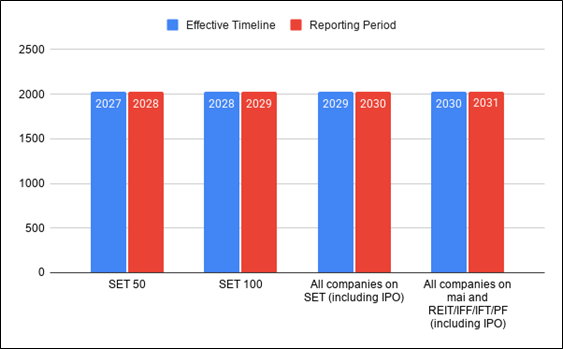
ที่มา: ดัดแปลงจากข้อมูลของสำนักงานคณะกรรมการกำกับหลักทรัพย์และตลาดหลักทรัพย์ (ก.ล.ต.) [4]
หมายเหตุ: SET50/SET100 = ดัชนี SET50/SET100; SET = ตลาดหลักทรัพย์แห่งประเทศไทย; mai = ตลาดหลักทรัพย์เอ็ม เอ ไอ (Market for Alternative Investment); REIT = ทรัสต์เพื่อการลงทุนในอสังหาริมทรัพย์ (Real Estate Investment Trust); IFF = กองทุนรวมโครงสร้างพื้นฐาน (Infrastructure Fund); IFT = ทรัสต์เพื่อการลงทุนในโครงสร้างพื้นฐาน (Infrastructure Trust Fund); PF = กองทุนรวมอสังหาริมทรัพย์ (Property Fund); IPO = การเสนอขายหุ้นต่อประชาชนเป็นครั้งแรก (Initial Public Offering)
บทสรุป
การที่ประเทศไทยเริ่มนำแนวทางการเปิดเผยข้อมูลที่สอดคล้องกับมาตรฐาน ISSB มาใช้ ถือเป็นพัฒนาการสำคัญของการยกระดับการรายงานข้อมูลด้านความยั่งยืนของภาคธุรกิจในประเทศ โดยสำนักงานคณะกรรมการกำกับหลักทรัพย์และตลาดหลักทรัพย์ (ก.ล.ต.) ได้ดำเนินการจัดทำแนวทางเป็นระยะ เพื่อให้ข้อกำหนดด้านการเปิดเผยข้อมูลความยั่งยืนสอดคล้องกับมาตรฐานของ ISSB เมื่อการดำเนินงานมีความคืบหน้ามากขึ้น บริษัทต่าง ๆ จะต้องพัฒนาระบบสำหรับการรวบรวม จัดการ และรายงานข้อมูลด้านความยั่งยืนและข้อมูลที่เกี่ยวข้องกับสภาพภูมิอากาศให้มีความน่าเชื่อถือมากยิ่งขึ้น การทำความเข้าใจหลักเกณฑ์เหล่านี้ตั้งแต่เนิ่น ๆ จะช่วยให้องค์กรสามารถเตรียมความพร้อมรับมือกับข้อกำหนดด้านการเปิดเผยข้อมูลที่กำลังเปลี่ยนแปลง ตลอดจนสนับสนุนให้ข้อมูลด้านความยั่งยืนมีความโปร่งใส สามารถเปรียบเทียบกันได้ และตอบสนองต่อความต้องการของผู้มีส่วนได้เสียและผู้มีส่วนร่วมในตลาดทุนได้อย่างมีประสิทธิภาพ
เอกสารอ้างอิง
[1] IFRS Foundation. (2023). Project Summary: IFRS S1 General Requirements for Disclosure of Sustainability-related Financial Information and IFRS S2 Climate-related Disclosures. IFRS Foundation.
[2] IFRS Foundation. (2023). IFRS S1 General Requirements for Disclosure of Sustainability-related Financial Information. IFRS Foundation.
[3] IFRS Foundation. (2023). IFRS S2 Climate-related Disclosures. IFRS Foundation.
[4] Securities and Exchange Commission, Thailand (SEC Thailand). (2025, November 28). SEC revises sustainability-related disclosure principles to align with ISSB standards. SEC Thailand.
Understanding ISSB and IFRS Sustainability Disclosure Standards: From Global Standards to Thailand
Policy Lab: Eco-Industry Research and Training Center, Faculty of Environment and Resource Studies, Mahidol University
Background
Sustainability information is increasingly relevant to financial reporting, as environmental, social, and climate-related concerns can have an impact on how organizations operate and create value over time.
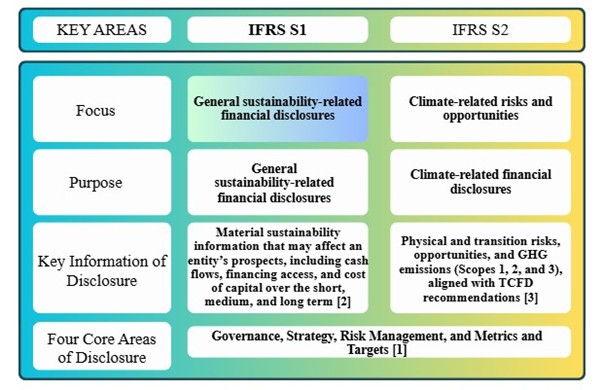
The International Sustainability Standards Board (ISSB) was established to develop a global baseline for sustainability-related financial disclosures. In June 2023, the ISSB issued its first two standards, IFRS S1 General Requirements for Disclosure of Sustainability-related Financial Information and IFRS S2 Climate-related Disclosures [1]. These standards provide a common framework for communicating sustainability-related risks and opportunities to capital-market participants.
Overview of IFRS S1 and IFRS S2
Thailand’s Transition to ISSB-Aligned Disclosure
Thailand is moving toward sustainability disclosure linked with the ISSB. The Securities and Exchange Commission (SEC) Thailand has developed a phased strategy to bring sustainability-related disclosures of listed firms in line with IFRS S1 and IFRS S2. The first phase is climate-first, focused on the disclosure of Scope 1 and 2 GHG emissions, with standardized and verifiable assurance. The initial phase targets the SET50-listed companies, as defined in the December 2026 Index Review with an effective timeline of 2027 and a reporting period of 2028, followed by the SET100-listed companies and additional listed firms in later phases [4].
ISSB-Aligned Sustainability Disclosure: Effective Timelines and Reporting Periods in Thailand
Source: Adapted from SEC Thailand [4].
Note: SET50/SET100 = SET50 Index/SET100 Index; SET = Stock Exchange of Thailand; mai = Market for Alternative Investment; REIT = Real Estate Investment Trust; IFF = Infrastructure Fund; IFT = Infrastructure Trust Fund; PF = Property Fund; IPO = Initial Public Offering.
Conclusion
Thailand’s adoption of ISSB-aligned disclosure is a significant milestone for corporate sustainability reporting in the country. The Securities and Exchange Commission (SEC) Thailand has been working on a phased approach to align sustainability disclosure requirements with ISSB standards. As implementation advances, companies will need to enhance their systems for the collection, management, and reporting of reliable sustainability and climate-related data. Early understanding of these criteria can help firms plan for changing disclosure demands and improve access and comparability of sustainability-related information.
References
[1] IFRS Foundation. (2023). Project Summary: IFRS S1 General Requirements for Disclosure of Sustainability-related Financial Information and IFRS S2 Climate-related Disclosures. IFRS Foundation. Available at: https://www.ifrs.org/content/dam/ifrs/project/general-sustainability-related-disclosures/project-summary.pdf
[2] IFRS Foundation. (2023). IFRS S1 General Requirements for Disclosure of Sustainability-related Financial Information. IFRS Foundation. Available at: https://www.ifrs.org/issued-standards/ifrs-sustainability-standards-navigator/ifrs-s1-general-requirements/#about
[3] IFRS Foundation. (2023). IFRS S2 Climate-related Disclosures. IFRS Foundation. Available at: https://www.ifrs.org/issued-standards/ifrs-sustainability-standards-navigator/ifrs-s2-climate-related-disclosures/
[4] Securities and Exchange Commission, Thailand (SEC Thailand). (2025, November 28). SEC revises sustainability-related disclosure principles to align with ISSB standards. SEC Thailand. Available at: https://www.sec.or.th/EN/Pages/News_Detail.aspx?SECID=12309&NewsNo=298&NewsYear=2025&Lang=EN