
จากการรายงาน ESG สู่การปฏิบัติจริง:
การเชื่อมโยง IWA 48:2024 กับกรอบและมาตรฐาน
การรายงาน ESG ระดับสากล
Policy Lab: ศูนย์วิจัยและฝึกอบรมอุตสาหกรรมเชิงนิเวศ
คณะสิ่งแวดล้อมและทรัพยากรศาสตร์ มหาวิทยาลัยมหิดล
(English Version Below)
ความเป็นมา
ปัจจุบัน ประเด็นด้านสิ่งแวดล้อม สังคม และธรรมาภิบาล (Environmental, Social and Governance: ESG) ได้กลายเป็นวาระสำคัญสำหรับองค์กรที่มุ่งยกระดับผลการดำเนินงานด้านความยั่งยืน สร้างความเชื่อมั่นให้แก่ผู้มีส่วนได้ส่วนเสีย และสร้างคุณค่าในระยะยาว ส่งผลให้องค์กรจำเป็นต้องให้ความสำคัญกับการดำเนินงานตามแนวทาง มาตรฐาน และข้อกำหนดด้านการรายงานที่เกี่ยวข้องกับการเปิดเผยข้อมูลด้านความยั่งยืน ซึ่งมีจำนวนและความหลากหลายเพิ่มขึ้นอย่างต่อเนื่อง
อย่างไรก็ตาม กรอบแนวทางและมาตรฐานแต่ละประเภทมีวัตถุประสงค์ กลุ่มผู้ใช้งาน และขอบเขตการดำเนินงานที่แตกต่างกัน การทำความเข้าใจบทบาทและความแตกต่างของแต่ละกรอบจึงมีความสำคัญต่อการเลือกแนวทางที่เหมาะสม ตลอดจนการพัฒนากลยุทธ์ด้าน ESG ที่มีประสิทธิผลและสอดคล้องกับบริบทขององค์กร ทั้งนี้ องค์การระหว่างประเทศว่าด้วยการมาตรฐาน (International Organization for Standardization: ISO) ได้เผยแพร่กรอบแนวทาง IWA 48:2024 ขึ้น เพื่อเติมเต็มช่องว่างระหว่างการรายงานข้อมูล ESG กับการนำหลักการไปสู่การปฏิบัติจริงในระดับองค์กร [1]
ภาพรวมกรอบและมาตรฐานการรายงาน ESG ที่สำคัญ
องค์กรทั่วโลกมีการนำกรอบแนวทางและมาตรฐานการรายงาน ESG ที่ได้รับการยอมรับในระดับสากลมาใช้หลายกรอบและมาตรฐาน โดยมีรายละเอียดสรุปดังต่อไปนี้
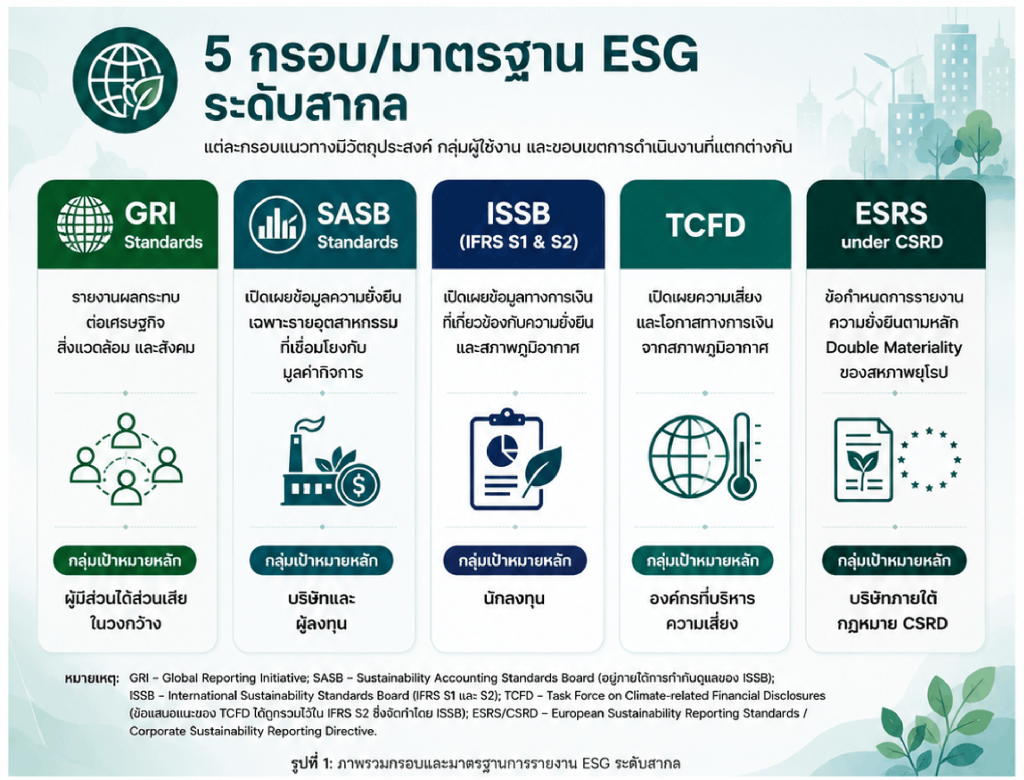
หมายเหตุ: GRI – Global Reporting Initiative; SASB – Sustainability Accounting Standards Board (อยู่ภายใต้การกำกับดูแลของ ISSB); ISSB – International Sustainability Standards Board (IFRS S1 และ S2); TCFD – Task Force on Climate-related Financial Disclosures (ข้อเสนอแนะได้ถูกรวมไว้ใน IFRS S2 ซึ่งจัดทำโดย ISSB); ESRS/CSRD – European Sustainability Reporting Standards / Corporate Sustainability Reporting Directive
ทำความเข้าใจ IWA 48:2024
เพื่อสนับสนุนให้องค์กรสามารถบูรณาการหลักการ ESG เข้ากับระบบธรรมาภิบาล กลยุทธ์ การดำเนินงาน และการบริหารผลการดำเนินงาน ISO ได้จัดทำ IWA 48:2024 – Framework for Implementing Environmental, Social and Governance (ESG) Principles หรือกรอบแนวทางสำหรับการนำหลักการด้าน ESG ไปปฏิบัติ [1]
IWA 48 มุ่งเน้นการบูรณาการหลักการ ESG เข้ากับระบบการบริหารจัดการขององค์กร ขณะที่มาตรฐานและกรอบการรายงาน ESG โดยทั่วไปมุ่งเน้นการกำหนดข้อกำหนดหรือแนวทางสำหรับการเปิดเผยข้อมูลด้าน ESG เป็นสำคัญ นอกจากนี้ IWA 48 ยังสามารถประยุกต์ใช้กับองค์กรที่มีขนาดและลักษณะแตกต่างกันได้ โดยนำเสนอแนวทางที่มีความยืดหยุ่นและอิงตามความเสี่ยง (Risk-based Approach) ซึ่งส่งเสริมให้องค์กรเกิดการพัฒนาและบูรณาการหลักการ ESG อย่างต่อเนื่อง แทนการมอง ESG เป็นเพียงการดำเนินงานเพื่อให้เป็นไปตามข้อกำหนดหรือข้อบังคับเท่านั้น [1]
กรอบแนวทางดังกล่าวประกอบด้วยหลักการสำคัญ 6 ประการ ได้แก่
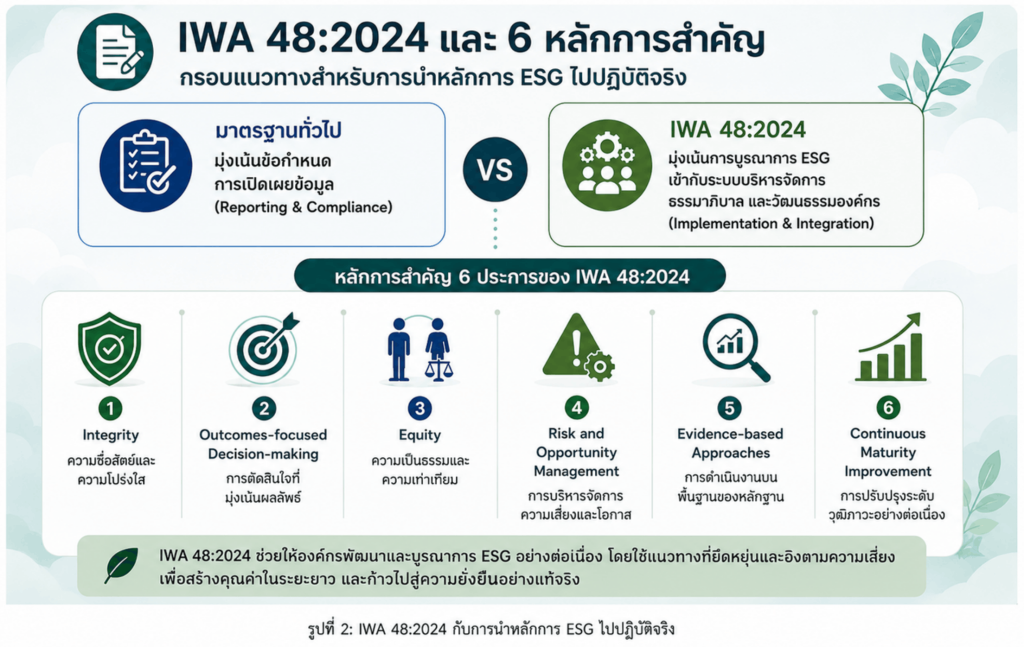
หลักการทั้ง 6 ประการนี้ส่งเสริมให้องค์กรนำประเด็นด้าน ESG มาพิจารณาเป็นส่วนหนึ่งของเป้าหมายระยะยาวและค่านิยมขององค์กร โดยมุ่งเน้นการดำเนินงานที่ก้าวไปไกลกว่าการปฏิบัติตามข้อกำหนดเพียงอย่างเดียว แทนที่จะมอง ESG เป็นเพียงกระบวนการจัดทำรายงานที่ดำเนินการเป็นครั้งคราว IWA 48 สนับสนุนให้องค์กรพัฒนาและบูรณาการหลักการ ESG อย่างต่อเนื่อง โดยผนวก ESG เข้าเป็นส่วนหนึ่งของวัฒนธรรมองค์กรและโครงสร้างธรรมาภิบาล [1]
บทสรุป
เนื่องจากบริบทด้าน ESG มีการเปลี่ยนแปลงและพัฒนาอย่างรวดเร็ว กรอบแนวทางและมาตรฐานต่าง ๆ เช่น GRI, SASB, ISSB, TCFD และ ESRS จึงมีบทบาทสำคัญในการกำหนดแนวทางสำหรับการรายงานข้อมูลด้านความยั่งยืนและการสื่อสารผลการดำเนินงานด้าน ESG ขององค์กร อย่างไรก็ตาม ความโปร่งใสในการเปิดเผยข้อมูลเพียงอย่างเดียวอาจไม่เพียงพอที่จะนำไปสู่ผลลัพธ์ด้าน ESG ที่มีความหมายและยั่งยืนอย่างแท้จริง ดังนั้น IWA 48:2024 จึงมีบทบาทในการเติมเต็มช่องว่างระหว่างการรายงานข้อมูล ESG กับการนำหลักการ ESG ไปสู่การปฏิบัติจริง โดยให้แนวทางเชิงปฏิบัติสำหรับการบูรณาการหลักการ ESG เข้ากับระบบการบริหารจัดการ การบริหารความเสี่ยง และกระบวนการตัดสินใจขององค์กร [1]
เอกสารอ้างอิง
[1] International Organization for Standardization (ISO). (2024). IWA 48:2024—Framework for implementing environmental, social and governance (ESG) principles. ISO.
หมายเหตุ: บทความนี้เป็นการสรุปเนื้อหาจากกรอบแนวทาง IWA 48:2024 – Framework for Implementing Environmental, Social and Governance (ESG) Principles ที่เผยแพร่โดย ISO (2024) เพื่อให้ข้อมูลเชิงภาพรวมสำหรับผู้อ่านทั่วไป และไม่ควรตีความว่าเป็นคำแนะนำทางกฎหมายหรือการตีความอย่างเป็นทางการของมาตรฐานดังกล่าว
From ESG Reporting to ESG Implementation: Connecting IWA 48:2024 with Global ESG Reporting Frameworks and Standards
Policy Lab: Eco-Industry Research and Training Center, Faculty of Environment and Resource Studies, Mahidol University
Background
Environmental, Social, and Governance (ESG) considerations are becoming increasingly relevant to firms seeking to improve their sustainability performance, build trust among stakeholders, and create long-term value. As expectations regarding ESG continue to increase, organizations face a growing number of guidelines, standards, and reporting requirements. These frameworks provide guidance for sustainability disclosure but generally differ in their objectives, target audiences, and scope.
Understanding their respective roles is important for selecting an appropriate approach and developing an effective ESG strategy. To help address this need, the International Organization for Standardization (ISO) released the IWA 48:2024 framework, aimed at bridging the gap between ESG reporting and the practical implementation of ESG principles at the organizational level [1].
Overview of Major ESG Reporting Frameworks and Standards
Several globally recognized ESG reporting frameworks and standards are used by organizations worldwide, as summarized below.
| Framework | Purpose | Primary Users / Audience |
| GRI Standards | Reporting impacts on the economy, environment, and society | Organizations reporting sustainability impacts to a broad range of stakeholders. |
| SASB Standards | Industry-specific sustainability disclosures linked to enterprise value | Companies disclosing industry-specific, financially relevant sustainability information. |
| ISSB (IFRS S1 & S2) | Sustainability-related financial disclosures | Companies providing decision-useful sustainability and climate information to investors. |
| TCFD | Climate-related financial risk and opportunity disclosures | Organizations managing and disclosing climate-related financial risks and opportunities. |
| ESRS under CSRD | Double-materiality sustainability reporting requirements in the EU | Companies subject to the EU Corporate Sustainability Reporting Directive (CSRD). |
Notes: GRI – Global Reporting Initiative; SASB – Sustainability Accounting Standards Board (under ISSB stewardship); ISSB – International Sustainability Standards Board (IFRS S1 & S2); TCFD – Task Force on Climate-related Financial Disclosures (recommendations incorporated into IFRS S2 by the ISSB); ESRS/CSRD – European Sustainability Reporting Standards / Corporate Sustainability Reporting Directive.
Understanding IWA 48:2024
To assist businesses in embedding ESG principles into their governance, strategy, operations, and performance management, the International Organization for Standardization (ISO) developed IWA 48:2024 – Framework for Implementing Environmental, Social and Governance (ESG) Principles [1].
IWA 48 focuses on how organizations can integrate ESG principles into their management systems, whereas reporting standards primarily establish requirements or provide guidance for ESG disclosure. IWA 48 can be applied to organizations of different sizes and types. It adopts a flexible, risk-based approach that promotes continuous improvement and ESG integration rather than treating ESG as a purely compliance-driven exercise [1].
The framework is supported by six overarching principles:
- Integrity
- Outcomes-focused Decision-making
- Equity
- Risk and Opportunity Management
- Evidence-based Approaches
- Continuous Maturity Improvement
These principles encourage organizations to incorporate ESG considerations into their long-term goals and organizational values, going beyond mere compliance. Rather than viewing ESG as a one-time reporting exercise, IWA 48 encourages continuous development and the integration of ESG principles into an organization’s culture and governance structure [1].
Conclusion
As the ESG landscape continues to evolve rapidly, frameworks and standards such as GRI, SASB, ISSB, TCFD, and ESRS provide guidance on sustainability reporting and the communication of ESG performance. However, transparency alone is not sufficient to achieve meaningful ESG outcomes. IWA 48:2024 helps address this implementation gap by providing practical guidance for embedding ESG principles into organizational management systems, risk management, and decision-making processes [1].
References
[1] International Organization for Standardization (ISO). (2024). IWA 48:2024—Framework for implementing environmental, social and governance (ESG) principles. ISO.
Note: This article summarizes the IWA 48:2024 – Framework for Implementing Environmental, Social and Governance (ESG) Principles, published by ISO (2024), for general informational purposes. It should not be interpreted as legal advice or an official interpretation of the standard.